
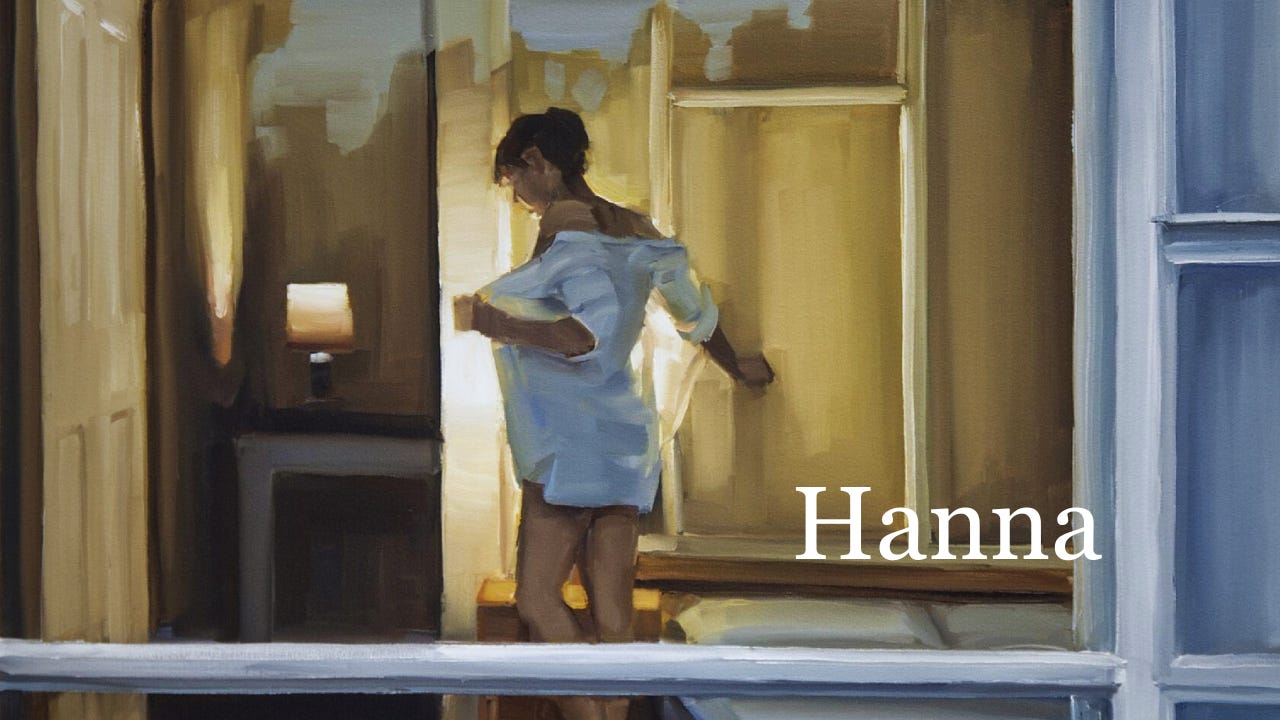
I met Hanna at a party when I was 36 and she was 19.
The event had been organised by Dominic Keighley, a man who’d made his money in finance and was now on a mission to turn himself into a one-man cultural hub in London. He’d gathered an odd assortment of people there; models, designers, journalists, his old finance friends, and even some ballerinas. The common theme tying us all together was that he judged us in some way important and that through the years money had flowed from his pocket to ours.
As he waded through the party in his tailored white shirt that had his initials embossed on the cuffs, he squeezed people by the shoulder, and spoke loudly at them in his alcohol-soaked voice, acting as though he thought he was entitled to everyone’s affection and attention because of how much he’d spent on the event. After he passed Hanna and I, she looked at him, and said, ‘What an embarrassing man,’ in her slight Polish accent.
After enduring so much self-conscious chatter that evening, it was refreshing to hear someone actually speak their mind, and I decided then, that I wanted to spend the rest of the night in this corner of the room talking to her.
And I got my way. For the next two hours, we talked and smoked by the large bay windows, as the party carried on around us. When we’d run out of cigarettes we went out together to buy some more. But after we’d left the off-licence, we decided that instead of going back to the party, we would walk up to Hyde Park which was nearby.
By now, I knew the basics about her. She was from a town near Warsaw called Żyrardów, she’d spent many years at the Polish National Ballet but had recently moved to London to join the Royal Ballet. She told me however that she was now in the middle of a difficult decision about whether to continue with ballet or leave and go to university. Ballet, she said, was fiercely competitive, and most dancers never became a principal which normally meant a poor paying and unrewarding career. She said she didn’t want to sacrifice the best years of her life for a teenage fantasy.
I wondered then exactly how old she was, and so I asked her. I had guessed she was quite a bit younger than me, but it surprised me when she said she was 19. For a moment, I didn’t know how to react, but during my silence she gave me a hard stare, as if daring me to find fault in her being so young. And in the end, I couldn’t resolve what to feel, so I changed the topic.
As we walked down St James’s Street she made me laugh as she performed her collection of different British accents. She then tried to teach me some different Polish ones but when I couldn’t even roll my r’s she wrote me off as a bad job, laughing at how little control I seemed to have of my mouth. It was all so effortless. And in the serious and light topics we talked about there was a candidness between us that I feel somehow only two strangers ever achieve.
As we walked past The Connaught, she pointed out that I hadn’t drunk any alcohol that evening and asked me why. I told her that I didn’t drink because I’d had a problem with it in the past. She paused, looked at me seriously and then said, ‘It’s good that you stopped.’ I think that if anyone else had said this I would have found it patronising, but the sincerity with which she said it made me think that she might have a connection to drink problems herself. So I asked her. And she said her dad was an alcoholic – but one who hadn’t quit drink. From then on a number of things started to slot together about her. I understood why she seemed more mature than her age – her childhood had been cut short, and for years now she’d had the responsibilities of an adult. The more details she told me about her growing up, the more I realised how improbable her path to being here right now was. And yet still, there was no note of pride in her voice, as she told me her story.
She then turned the conversation on me, and asked me more questions about myself. I told her about my work as a designer and how after I’d cleaned my shit up, my career had sort of taken off. I found myself confessing how much my job meant to me, in a way I would normally feel too embarrassed to ever mention.
We spoke about so much as we slowly walked under the plane and oak trees. It was one of those entirely alive conversations that made me feel like the dark pathways of Hyde Park we walked along were the centre of the world. After an hour of walking we sat down on a bench and smoked another cigarette together. When we’d finished, the conversation suddenly became slow and tense. Not because anything bad had been said or we’d run out of things to say, but because the moment when something might happen between us had arrived, and we both knew it had. I was hesitant to make a move. I kept on thinking about the fact that she was only 19, but there were also just conventional nerves holding me back too. My heart thumped as the moment of possibility stretched out. Both of us were looking out at the empty park ahead, and then I turned slightly to glance at her and she looked back at me, and cautiously, we moved together and kissed. Her palm moved onto my chest, and my hand onto her thigh as we slowly enveloped each other.
Twenty minutes later we parted at Green Park station after exchanging numbers. I felt a kind of serenity as I rode the Victoria line up to Highbury. It had been something close to a perfect evening.
But for the rest of the next day I felt conflicted about whether to message her. I worried about what it would say about me to date someone so much younger, but my private desires were straightforward. I typed out and deleted multiple messages to her before finally sending one. We then messaged back and forth and agreed to meet that weekend at Tate Modern.
I surprised myself at how nervous I was as I stood in the turbine hall waiting for her. My heart was fast in my chest, and it sped up even more when I saw her round the corner. She was wearing a loose-fitting jumper, bootleg jeans, with her hair scraped back in a tight ponytail that made her look striking. I felt awkward as we hugged and spoke for those first few seconds, but soon after, I settled into the comfortable knowledge that we could get along easily. For the first hour it felt more like we were good friends walking around the gallery and looking at the exhibits than it did a date. But this changed when we went into the Rothko room. We moved in opposite directions around the room and met in front of Black on Maroon; a large painting with two red stripes on a black haze. I had a feeling of recognition as I stared at it; I was one red stripe and she was the other, and as I had this thought, she slowly interlinked her hand in mine and an electric pulse flow up my arm and through my body. And from then on, our time together felt different.
We continued to meet for other dates and on our fourth she came back to my apartment.
A series of images and memories stand out for me from those early days. The main one was our long walks. On some unconscious level I think both of us were drawn to reliving that first night we’d met and paced through the quiet Westminster streets and dark Hyde Park paths. Our walks tended to be in different places in north London. We would find a café, get coffees to go and then walk slowly through the back streets of Highgate and Hampstead for hours, and when we were tired we’d stop in a pub, and Hanna would get a half pint and I’d get a diet coke and we’d play cards and carry on talking.
I wanted to know everything about her. I asked her question after question, about ballet, about Poland, and about her life back there. She told me about her turbulent family dynamics and her long-suffering mother and brother. She told me about the town she was from – the tall distinctive red bricked buildings that were once textile factories, the Polish bakeries and the open filled baguettes you could buy for lunch, and her favourite Polish food, pierogi; little moreish dumplings filled with mashed potato, cottage cheese and onions, that you could never just have one of. She told me also about her early days in ballet; winning the scholarship at the Polish National Ballet and then getting her place and transferring to the Royal Ballet. But she also confessed to me about how she felt alienated at the school now. She didn’t get on with any of the other apprentices and it sounded like the feeling was mutual. She thought they were too immature and disliked how incredibly drunk they got every weekend. And I couldn’t help but think how much she would have disliked me when I was her age.
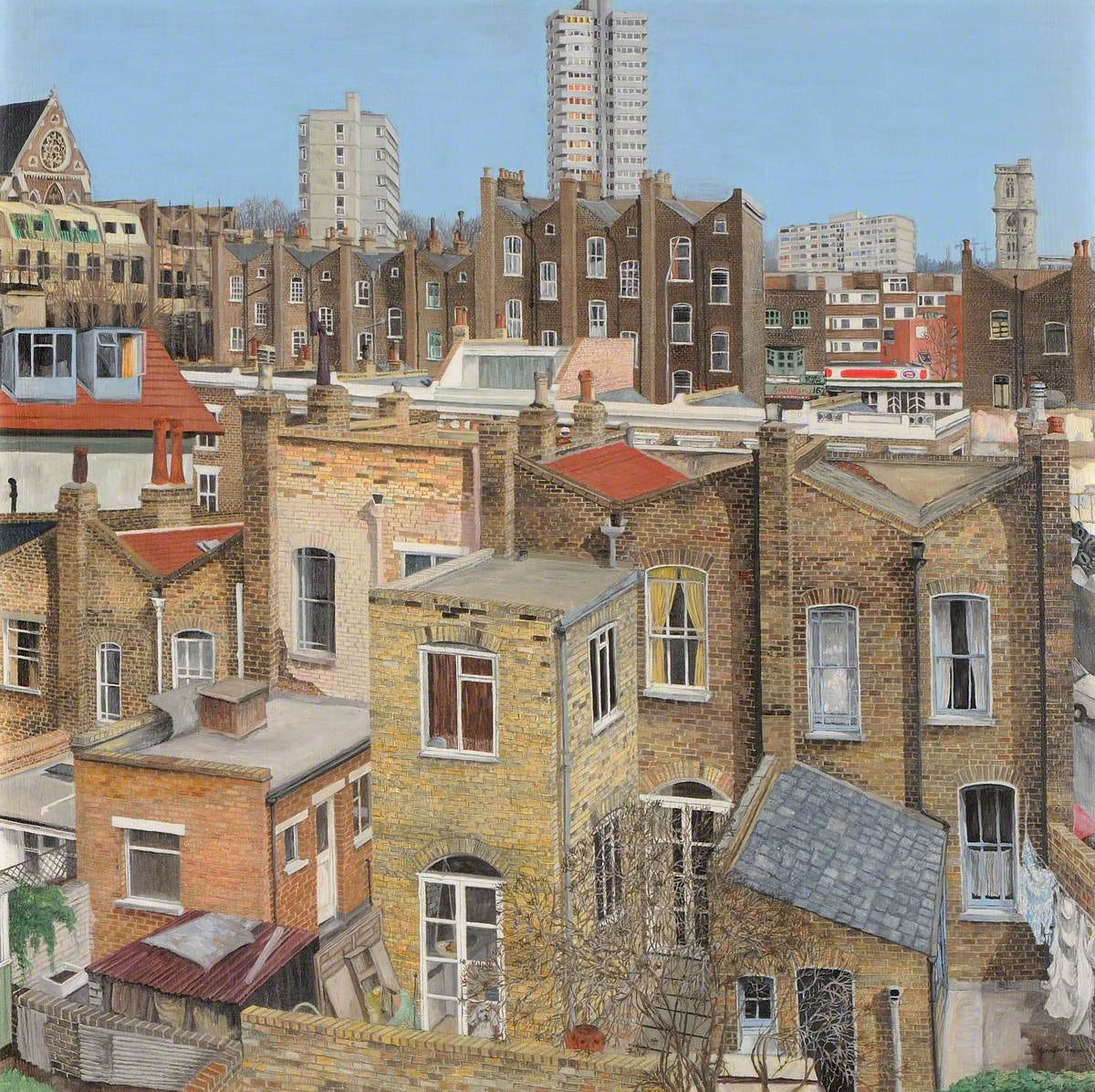
After two months or so, she was spending a few days a week at mine. My apartment was one of the things I was proud of. I’d bought it a few years ago after work started taking off and then gradually I’d worked on it; swapping the light fixtures with brass pendants, replacing the kitchen countertops with white Carrara marble, and putting in a vintage charcoal wool sofa in the living room. But despite this, I rarely ever had people over. In all these years I’d only organised some two dinners. And so it was nice to finally share it with someone.
When I think of us spending time together at my apartment in those early days, I picture us in the living room talking for hours; a record playing on the turntable, me sitting on the sofa and her lying on the floor with her legs leant against the wall to stretch out her hamstrings after a long day of ballet. I picture too us standing in front of the mirror in the hallway as she tries to teach me first position, tendu, arabesque and passé. Her playful teaching persona changing at an instant as she reprimands me for curving my back. Then joint laughter, after I wobble and lose my balance.
I occasionally worried during these months whether this was really the type of lifestyle a 19-year-old wanted. It sometimes felt like we were living the lives of people double our ages. No nights out, no drinking, no drugs, no parties. All we needed to complete the picture of middle-aged Londoners was a dog called Monty and an interest on what catchment areas had the best schools. But what stopped me from worrying too much about this was the unimpressed way she spoke about the other ballet students whenever they got drunk. Partying was something she appeared to scorn rather than be interested in.
One awkward part of our relationship though was the gap in our ages. I admit in those first months I was coy about mentioning her to my friends because of it. But after a while I felt sufficiently guilty about this that I organised a trip to the pub to introduce her to them. It didn’t however help my doubts that she was too young. I know it must have been intimidating for her – meeting a partner’s friends when you’re the same age it can be nerve wrecking – but they were at least 10 years older than her too, and yet, even with this in mind, she was still shyer than I would have hoped. And I sensed that she was aware of this too, because after any night with my friends at the pub, she would be withdrawn and thoughtful afterwards. But whenever I tried to pry, and ask her what was wrong, she would say that nothing was.
In the end she decided to give up on ballet and accept her place at university. And after her final term at the Royal Ballet she moved into my apartment. It was meant to be a tide over whilst she found something else, but she ended up staying. These months over summer were some of my favourite. The little routines and rituals we settled into; her making coffee in the mocha pot before I woke up so she could present me a cup in bed, sharing a cigarette outside on my small balcony, making dinner together in the kitchen, both of us working on our laptops in the lounge whilst an album played on the record player. We were both in sync with what we wanted, and what gave us pleasure. On the weekends we would walk or cycle to a park and read our books or play card games. Or we might go to the Barbican, watch a film, have some food in the café and sit on the terrace by the water and watch the sun set.
It felt almost like a dream, a stretch of happiness, cocooned away from the world together.
As it got closer to her starting university, she asked me if she could continue to stay with me, and we talked it through together. I told her how halls were a major part of uni life, and where most people made friends. But she was put off the idea after living in dorms at ballet school. She didn’t want to be around more chaotic drunk people, sharing living spaces with them and dealing with all their immaturity. Despite my pushback she seemed pretty certain on this, and said if she didn’t live with me, she would find a room in a shared house rather than go to halls. And so we decided she would stay, which was what I’d secretly hoped for.
Her start at university did not go well. She hated fresher’s week and came back from each organised event in a sullen mood. She seemed so dejected that I worried she might drop out before it’d really started. But I kept on insisting; that if she carried on going to events, she was bound to find some of her people – out of the thousands at university it was guaranteed there would be some she would get on with.
And I was right, one day she came back from campus and as soon as she walked in through the door I could see the difference. She told me a girl had come over and started talking to her in a smoking area on campus. The girl said she’d spotted her before and had a feeling they’d get on. Her name was Cal, short for Calypso, and she was a little older than most freshers as she’d taken two years out before starting. They’d bonded over Kieślowski films and Tokarczuk books and had swapped numbers.
This turned out to be the key friendship for the rest of her social life at university. Cal introduced her to an existing friend group that she started to become a part of. She began coming back with books she’d been leant or movie recommendations she’d got from one of them. It was nice. Her enthusiasm about all these new things was contagious. But there did seem to be one point of tension between her and them. They were all into clubbing and she had no interest in it. She’d turned them down twice to go out. But the third time, Cal bought her a ticket and insisted she went. Before she left the house to go to pre-drinks she told me that the night apparently finished at 4am, but she thought she’d probably be back by 12. ‘It’s techno,’ she said and rolled her eyes.
But she surprised us both. I stayed awake and she got back at half 4. ‘You didn’t wait up did you?’ she asked when she saw I was still on my laptop in bed. I shrugged. ‘How was it?’ I asked her. She hesitated a moment and then said, ‘Fun?’ and laughed. She sat down on the bed and told me how once you’d got used to the monotony of the music it kind of hypnotised you to dance. ‘Did you drink much?’ I asked her, she shrugged, ‘Not really,’ and then she said, ‘but most people didn’t – they were all on drugs.’ This made my heart momentarily twitch, but I tried not to show it. ‘Did you take any?’ I asked. ‘No.’ She said and frowned, as though it was foolish of me to ask.
A few weeks later, she’d been clubbing once more and seemed to enjoy it even more. I think it also made her closer to her new friends who she talked about more at home. It was also clear that techno – something she’d previously scorned as ‘not even music’ – was growing on her too. One day when I got back to the apartment, I went into the kitchen and found her dancing to techno in a crop top and shorts as she chopped veg. She hadn’t heard me come in and I watched her for a moment before saying hello. She screamed in embarrassed laughter and made to turn down the music, but I turned it back up and nodded my head to it, ‘Is the boring music maybe growing on you?’ she shrugged with a guilty grin.
A couple of weeks later she went on another big night out. This time I managed to fall asleep before she got back but she woke me up when she came in. I could tell at once that she wasn’t her usual self. She looked concerned when she saw me and said, ‘I need to tell you something,’ which made the hairs on my arms stand on end. ‘What?’ I asked her. It was far less dramatic than anything I’d feared: she told me that she’d done drugs with Cal, and I think she thought I’d be disappointed. I tried to reassure her, ‘Just because I don’t do stuff anymore doesn’t mean you shouldn’t – you should do whatever you want.’ She continued to study my face intently for any clues I was secretly annoyed, so I reassured her multiple times. I then made us both a peppermint tea, and after a while of listening to an audiobook and cuddling in bed, she fell asleep.
The next day we both woke up late in the afternoon. I could tell she was run down and fragile so I tried to do my best to make her feel at ease. I took the duvet into the lounge and put her on the sofa underneath it. Then at 6 I ordered us pizza and when it arrived I put a Pixar movie on the TV and got under the duvet with her. For a moment she looked almost tearful, I asked her what was wrong, and she just said, ‘Thank you for looking after me,’ and her voice caught. She nestled her head onto me and I stroked her hair.
For the rest of the month she didn’t go out again and we spent more time together than we had since she’d started university. We often worked together in the apartment at opposite ends of the dining table, taking it in turns to make each other teas and coffees, at peace in our shared silences.
But at the start of the next month, she went clubbing again. She spent a long time in the bathroom getting dressed and putting on makeup. But I was confused when she came out as she was wearing leather trousers and a thick jumper that I thought would be too hot for the club. I didn’t say anything because I didn’t want to intervene, and it all made sense an hour later. She’d gone into the bedroom to get her shoes, and a moment later I’d followed her in and realised then that the jumper wasn’t really part of her outfit. She’d taken it off and was looking at herself in the mirror, wearing a lingerie leotard that we’d bought together. My heart turned over as I saw her inspecting herself in this translucent lace outfit. She hadn’t noticed I was there but when I took another step into the room she turned round in a panic and said, ‘I’m not sure I’ll wear it.’ But without saying a word I picked up her black choker from the dresser and put it on her. She looked at me in the mirror and I looked back. She understood what the gesture meant and ten minutes later, she left in the same outfit.
Whilst she was out, I was more restless than I had been for any other night. I tried at first putting on a film but I couldn’t sit still and watch it. So I tried to do some work instead, and focussed with an almost angry determination – a type of concentration I hadn’t tapped into since the early days when I’d given up alcohol. I was merciless with each new design that I started on, constantly scrapping my attempts, wanting to create something of undeniable quality. But after a couple of hours I realised I was going round in circles. None of it was as good as I wanted it to be. I then went onto the balcony and smoked a few cigarettes in quick succession, allowing all the buried thoughts that had been troubling me to rise to the surface. I pictured her in that lace outfit, her cheeks pink and her skin glazed in sweat, as she danced with her eyes closed to the music, as everyone watched her. I gripped the railing. I knew these thoughts were all beneath me, but this didn’t stop me from having them, it just layered them with guilt.
Driven by these same impulsive thoughts I went onto her Instagram and tried to find the profiles of male friends who she was there with. I found two of them she’d mentioned – Jay and Marcus – and scrolled through their pages, looking at their photos to get a sense of them, but also looking to see if she had liked or commented on any of them. I knew it was foolish to be driven by these jealous impulses, I was certain she would never cheat on me and that we were happy together. But I think my jealousy was more so linked to the thought of people getting access to a side of her that I didn’t get to see. The imagined images that haunted me the most weren’t of her kissing one of these men, instead it was her sneaking into a cubicle with one of them to share some drugs, or leaning on one of them as they smoked outside. These pictures of shared rule breaking or intimacy were what made my blood run hot. I missed my days of drinking and drug taking more in this moment than I had in years. I wanted to be her accomplice in some hedonistic night out.
The next day, I tried to keep any hint of these feelings hidden. When she asked me how my night had been, I shrugged and said I’d done a bit of work and then gone to sleep. But from this point on something changed within me. I became jealous and angry. If she was late getting back home after a day at uni, I would get irrationally annoyed, in a way I would never have done before. I sometimes invented justifications about how it was inconsiderate for her not to have messaged me if she was running late, but deep down I knew that this had nothing to do with it.
In the following weeks I poured myself into my work. I think I hoped I could burn away these negative feelings through hard work and distraction. However, during this time there were a handful of moments that unsettled me again. On one Friday, Hanna got back from campus to the apartment and asked, ‘Are you ready then?’ I asked what for, and she said about going to the pub. It took me a moment – but then I realised that my friend Lauren, who had invited us to the pub that evening must also have messaged her too. ‘Oh, I thought we’d just stay in – something lowkey instead,’ I said. ‘But it’s just at The Prince, we should at least show our faces, right?’ I told her that I didn’t fancy it, and whilst she didn’t try and argue, I could tell she was disappointed. For the rest of the evening that we spent together in the apartment, I kept on trying to analyse what she was thinking. That I was dull? That this wasn’t much of a Friday night? That she’d rather be out the house than with me?
About a week later, I was walking down the hallway to the kitchen when I heard her chatting on loud speaker with one of her friends. I loitered by the door for a moment and heard one of her male friends ask her if she wanted to go out that evening, she said no – she was cooking. Then he said, ‘What about after you’ve cooked for grandad?’, she reproached him, ‘Jay – I told you not to call him that,’ ‘My bad, I mean after you’ve finished cooking for dad,’ she laughed, and told him off again, but said she wasn’t going to go out. At that point I decided not to go into the kitchen and went to the bedroom instead.
My reaction to overhearing this changed over time. As I walked into the bedroom, I was annoyed but could see the harmlessness of the joke, and I knew I’d probably make a similar one if my friend who was dating someone much older. But the next day this little overheard moment started to transform in my mind. I felt angry at the disrespect. I felt annoyed at her friend, but also at Hanna. I thought if she’d done a good enough job standing up for me, he wouldn’t have made a joke like that. But maybe comments like this were made all the time by her friends? Maybe I was often the punchline to their jokes. Grandad. Old man. Boomer. I imagined it all, and felt myself become less warm towards Hanna that week.
It seems odd to say but another thing that unsettled me were changes in our sex life. Normally I loved how intense she could be in bed. But during one time we had sex, she was particularly assertive and confident and instead of it making me feel excited as it usually did when I saw some new depth of her sensuality, it unnerved me. I think on some level I was afraid that I couldn’t contain this level of sexual excess and it became another source of worry that nibbled away at me.
My anxiety continued to dip and spike at various points in the following weeks, but when the university term ended and we started spending more time together, it eased almost entirely. Our lives synched up in the same way that they had over summer. And we became more intentional with our time together as we counted down the days until she would fly back for Christmas.
I prepared a surprise for our penultimate weekend together and booked us a hotel in Oxford, so we could visit St Catherine’s College together. In the early months we’d dated, I’d taught her about the world of design. We would often sit on the sofa and flick page by page through one of the many large coffee table books that I had on architecture and design, and we’d talk about the history and inspirations of the pieces, and what we liked and what we didn’t. In all of this, one of her favourite works of design was St Catherine’s college by the Danish architect Arne Jacobsen. She liked the simple integrated beauty of it and how he designed everything from the grand hall down to the lampshades and cutlery too.
I told her on Friday afternoon that she needed to pack her bags. She was confused, saying she still had a week before she left. ‘No, we’re leaving in three hours.’ She frowned at me confused, and then I explained how we were getting the train to Oxford in three hours, staying in a hotel, and how we’d get to see St Catherine’s College tomorrow. ‘Really? For real?’ she kept on repeating, as I laughed and nodded. She then launched herself at me and hugged me like a koala clinging onto a tree, and then she scampered around the living room in a little celebratory dance and went to start packing. From this reaction alone, I thought the hotel and train ticket purchases were the best value money I’d ever spent.
On Saturday morning, after taking some pastries from the buffet we walked to St Catherine’s college. We’d done our homework on the train up so knew about lots of the little details of the college to look out for. It was out of term, and quiet, but a porter noticed us getting excited by the door handles on the lodge and became our unofficial tour guide. He was a jolly Scottish man who took pride in the place, and he told us about Jacobson’s sometimes fiery collaboration with the designers Wegner and Møller as well as the then college president. He took us to the oversized quadrangle first and we stared a moment at the open expanse that housed a great green pool of close-cut grass. He explained how it was a requirement that every college had to have a quad regardless of how modern it was, and then he put his hands behind his back and led us to the great hall.
It was empty when we entered, and I noticed Hanna and I hushed our voices as though in instinctive reverence for the space. We had timed our visit just right. Along the top of both long walls were L shaped windows and the midday sun must have been perfectly aligned with the building so that it streamed in through one side and out the other, forming straight lines of white light that cut across the hall. As we slowly walked down the corridor of tables, passing through the stripes of light, we glanced at each other and shared a long look of mutual recognition of what this moment meant to us.
After permission from the porter, ‘Of course, of course!’ Hanna sat down on one of the high table ‘professor’ chairs. Part of their design allowed them to spin side to side: ‘So when there’s a boring sod you can turn away from them,’ the porter explained with a laugh. I took a photo of her sat on the chair, with an elbow casually rested on the table and her head tilted back. He then encouraged me to sit next to her so he could take a photo of us both. We both then posed in unsmiling seriousness for the first photo, and then he suggested, ‘How about one with a wee smile as well?’ and this jibe in his Glaswegian accent made irresistible laughter come to our lips, and he took our photo again.
For the rest of the weekend, we walked miles through the city and through the meadows that bordered it. We bought oats from a shop and fed the geese by the river. Hanna tried to coax one of them to eat directly from her palm and despite my cautions she held still as a tall goose snapped clumsily at the oats in her hand. We walked arm in arm, in our coats, as our hot drinks piped out steam from their plastic lids and played I spy. We accidentally trespassed into a college’s gardens and scurried away in laughter when a serious looking professor type approached us. A group of Asian tourists posed each in turn in front of an ordinary looking post-box, so we decided to follow their lead and get our photo taken in front of it too. That evening, when we went for dinner in a restaurant that I’d found online, she wore her silk slip dress and hair tied up just in the way she had for our first date to the Tate. And when she went to the bathroom she sent me a message, I opened it and saw she’d taken a photo in the bathroom mirror of herself with her dress straps off her shoulders and her chest exposed, and when she returned to the table she had a feline smile on her lips.
The whole weekend I experienced a kind of warm boundless set of feelings towards her that I have never felt before.
She had a difficult time over Christmas. Her dad was drunk throughout it all. We messaged every day, and when she could she escaped the house and went for a walk and phoned me. I almost didn’t recognise her on the phone. Her voice was drained of all enthusiasm and emotion, and the few details she did share were recounted as coldly stated facts.
Only when she was back in the new year did she return to the version of her I knew.
Her eyes watered as she told me about how bad things were with her dad, and in the following days and weeks she sought out more affection from me than she normally would. She wanted to spend as much time together as possible, and she was proactive in looking for nice things to do together each weekend; whether it was just going to a new coffee shop that had opened or exploring a new park we’d never been to together. One day as we were walking back to the house after a tranquil Sunday together she looked up at me and said, ‘You’re my favourite person to spend time with.’ The impulsive sincerity she said it with – as though it had just fallen out of her mouth – moved me as much as the words themselves.
One topic that we spoke about often during this time was Taniec, a collective that she and her friends were creating to put on nights in London. It was fun helping her brainstorm it all: how they would get good artists, which clubs to target and how they would market themselves. One tactic that I suggested for getting some press was for Hanna to ask her friend who worked at the arty student magazine to do an interview with her and feature Taniec. After some persuading, Hanna asked her friend, and an interview was agreed. Ever since, I’d been impatiently refreshing the magazine’s website. And on one Thursday evening it appeared. I inhaled the whole thing in a few minutes and then went into the living room to find her.
‘Taniec, the new collective that hopes to make a mark on London’s clubbing scene,’ I read out, and Hanna looked confused for a moment and then her eyes focussed.
‘They’ve published it?’ she asked.
I nodded with a smile and continued, ‘Amongst the founding members is Hanna, a former Royal Ballet dancer, who has hung up her ballet shoes, but hasn’t given up on dancing.’ Then in a put-on French accent I carried on, ‘For me, techno is like a blank canvas, that allows the body to paint its dance upon it, says Hanna, when asked about the music.’
‘I didn’t say that!’
‘A blank canvas, that allows the body to paint its dance upon it,’ I repeated emphasising my French accent even more and she threw a pillow at me. I laughed and sat down next her, ‘It’s good, I read it through.’
‘It sounds like a pretentious nightmare.’
‘It’s the perfect level of pretentious. And look they chose a good photo too.’ I handed her my phone, and she looked at it.
Her face looked concerned as she skimmed over the article, so I squeezed her leg and she looked up. ‘I promise, it’s good.’
She pressed her lips together, ‘She did me dirty with that blank canvas shit.’
‘A little,’ I shrugged with a grin. ‘So how does it feel to see yourself in print?’
‘Concerning…’
‘Hope you won’t let it go to your head.’
‘Can’t make any promises.’
When term began, she started going out as she had before. I expected this, but part of me wondered whether being around her alcoholic dad over Christmas would put her off drink or drugs to some degree. But it didn’t, she went out just like she had before and because of it I started to see less of her, and it started encroaching on our weekends. On Saturdays, I would wake up at around 9 as usual, then go into the living room and wait for her to get up so we could go and get brunch or go for a walk together. But then the hours would roll by with no sign of her, and I’d start to become annoyed. Some weekends I would go out by myself instead of playing this waiting game. But when I was at a coffee shop by myself, I’d always be restless, waiting for her to wake up and finally message me.
Each weekend that she was too hungover, tired or absent to hang out with me felt like a rejection. I know we lived together and so we saw a lot of each other, but the weekends were our quality time, and by deciding to go out and party every weekend – she was trading this time together for time with her friends. It felt personal, and sometimes I moralised her choice – hadn’t she said that I was her favourite person to spend time with – and wasn’t she turning this statement into a lie with her repeated actions.
Aside from going out more, another thing that made her less present was Taniec. All the planning in putting on their first night started taking up more of her time. She stayed on campus late into the evenings with her friends and worked on it with them. Also, I don’t know if I was imagining it but she seemed less enthusiastic talking about it with me. It used to be one of the topics of conversation that I enjoyed the most. There’s almost nothing as exciting as a new creative project – all the possibilities of great success and failure coexist, and it’s fun to dream out the different paths. I wanted to help however I could, and as part of that I’d offered up my design services for their promotional work and branding. But one day, when I came back home, I saw a stack of flyers for Taniec sitting on the kitchen table.
It hurt seeing them. She’d seemed enthusiastic about my help before, but now she’d completed the posters without even asking for advice or showing me a draft.
When she got back I mentioned them in an offhand way, but I think she still picked up that I was annoyed. She however made no attempt to placate my slighted ego and if anything became cool towards me. I wondered then if she thought I was trying to muscle in on her project which annoyed me even more, but I couldn’t think of a way of telling that I wasn’t that didn’t sound insincere. So instead, I made myself a promise, that from then on I wouldn’t involve myself in anything Taniec related – I wouldn’t even reference it, unless she spoke about it first.
All of this drove me into my work again. I resolved no long to be the one waiting hopefully each evening or on the weekends to hang out. I would become busier than her, and I would get involved in projects bigger than I had done before.
This renewed focus on my work did me good. But it wasn’t a complete fix for all my anxieties. One theory that slowly built in my mind was that she was in some way embarrassed by me. I’d told her multiple times since we’d lived together that she was free to invite friends over to the house. But she never had. I used to think nothing of this, but I realised over time that it might be because she didn’t want me interacting with her university friends. I remembered that teasing comment one of her friends had made where he called me Grandad, and wondered if there was a clue here about why she didn’t want them to meet me. This little theory, started to grow of its own accord, until one evening over dinner, I asked her directly, why she never invited people over. She became defensive; she said something about wanting to keep the apartment private but I felt she was avoiding my eyes as she answered, which made me doubt her more. It was a corrosive thought – that I was some embarrassing secret that she wanted to keep away from her cool friends, and it began to poison more of my mind as time passed. Finally, I decided I wanted more evidence, so without warning, I cycled to her campus when I knew she was having lunch with her friends and messaged her ‘Surprise!’ and that I was there.
She was genuinely shocked but she didn’t try and hide me away and I ended up eating with her friends. In the end, the reaction of her and her friends went against the theory I had. They were nice to me, and I could tell she must have talked about me a decent amount given all they knew about my work. But instead of this making it a pleasant experience, I found myself acting out of character. I think the anxiety of the situation and the build up to it had made me nervous, and as we had lunch together I even felt my voice quiver as I spoke to these 21 and 23 year olds. It was embarrassing – managing to be anxious in front of a group of uni students. I’d always imagined that if I ever met her friends, I’d manage to inhabit a position of effortless authority because of my age.
As I cycled back to my office, I felt a tight knot in my chest, and I then remembered Hanna’s shy performance in front of my friends, and how I had judged her for it and the knot tightened.
I put even more effort into my work. I continued to want to be busier than her, and it gave me a certain pleasure when she would suggest we do something and I’d look up from my laptop and apologise that I was a bit too busy at the moment. There were three main things I was working on at that time. I was completing a rebranding job for a Finnish fashion company, I was doing some consulting work for an old client, and I was in the process of pitching to Kings Cross Grow, a new development just outside of Kings Cross that I’d been shortlisted for. I was often lazy during these formal pitching processes because I know how low the odds of being chosen are, and that it it’s work I won’t get paid for. All this was still true for the Grow project but I made myself work as though I’d already won it. It was the type of gig that could change a designer’s life – a chance to physically shape the environment of a city – the type of thing that gets your name and work into the glossy design books of the future.
Being busy helped. But still, during the evenings when she was out clubbing and I was at home, I was unable to distract myself with work. I would wonder as I smoked cigarettes on the balcony outside whether this state of agitation I felt whilst she was out would always be with me. The anxious stay at home husband.
I would think many different things in these quiet moments alone in the house. Sometimes I thought about the change in her; when we’d first met she’d turned her nose up at people who got drunk and took drugs, and we’d established a connection in part through my sobriety, which now made me feel resentful because it seemed like she was betraying all of this. But other times, I thought about giving up sobriety and starting to really live again. I started feeling nostalgic about my times on drugs and booze. How good it felt to be fucked up and reckless with other people – to be charming and interesting, and feel that energetic attraction to someone else in that state. Whenever I pictured these romantic associations to drink and drugs, it wasn’t as though I forgot about the ugly parts that had originally driven me to sobriety, they just felt less real.
In a way, I started fetishizing the idea of inebriation in of itself. I’d watch videos of people clubbing on YouTube or Instagram, and seek out ones with people in that state of losing control. I also searched through all of Hanna’s friend’s profiles for photos or videos of her in similar state, and the few that I found became a new type of turn on for me.
The more I thought about it, the more I wanted to get access to this part of her. In all our time together, the most I’d ever seen her was tipsy after she’d had a couple of half pints at the pub. But now I wanted to see the wild side of her that her friends got to see and be a part of. But it was hard to think about how to bring this about. In the end, I did something a bit contrived, and bought home a bottle of wine one day after doing the shopping. That evening I said it was in the fridge, and told her I realised she’d never really drunk anything in the house except for the odd beer and how I didn’t think that was fair – just because I was teetotal didn’t mean she couldn’t enjoy a glass with dinner. I think she thought the gesture was nice, but she seemed sceptical about having too much, and despite my exuberance at pouring her another glass, she turned me down.
I cringed at myself afterwards – trying to get her drunk for my own satisfaction seemed like a seedy thing But the unfair thing about it all, was that if I also drank, then sharing a bottle of wine and getting merry together would be the most natural thing in the world.
Two big events happened in the same week. On Wednesday I got a call from Kings Cross Grow and the man phoning me told me that they had chosen my proposal. I’d won. A £180k commission. I listened as they asked me if I could come to their offices tomorrow to sign the contract and meet with the architects and local authorities, and if I would be interested in doing an interview with someone from Art&Design at the Guardian. I said yes to everything without thinking and after the conversation finished I sat down in a daze.
I waited for Hanna to get back that evening to tell her. She squealed and made me repeat multiple times all the details of it. ‘We have to celebrate! We need….’ She said, then went into the kitchen to get an unopened bottle of sparkling water, she then shook it up and opened it up so it sprayed over me and then her, ‘Woooo!’ she cheered as it soaked us. ‘Like champagne,’ she said, I laughed and told her I’d got that bit. She poured us two glasses of sparkling water and she toasted to my success. We ordered takeaway then spent the rest of the evening talking about the project and what it could mean for my design career.
The day after that Hanna had big news herself. I knew something good had happened when I heard her excited voice speaking loudly on the phone as she walked up the stairs to the apartment. She hung up before she came in and I looked up to see her smiling face. ‘Guess what?’ she said, ‘What?’ I asked, ‘We sold all the tickets for the night!’ For some weeks she’d been worried that they’d chosen a club that was too big for their first night and that they might not recoup the money they’d spent on the venue. But after a big push recently in promoting the event, they’d come through. We went out to dinner to celebrate. After we’d finished our starters, she got a phone call from one of her Taniec friends, and she stepped outside to take it quickly, ‘You don’t mind do you?’ I watched her through the glass as she spoke to them, her face lit up and the odd enthusiastic vowel sound pierced through the window. And as I watched her a slow and undeniable realisation happened inside me, my heart became heavy and my pulse quickened. All the laughter and chatter in the room seemed to elongate as though time had slowed down. I looked away from her, and down at my hands and tried to calm myself for when she came back.
For the rest of the dinner I think I put on an okay performance of being normal, but as we rode the uber back and she messaged people on her phone, I confronted the truth of what I’d felt. I had known in that moment I saw her on the phone that winning my recent commission, in some sense what my career had been aiming to: hadn’t made me happy. And I wasn’t just not happy. I was miserable. I think I’d repressed this in the previous couple of days, but seeing her genuine joy as she spoke on the phone made it all real to me. There was something horribly sinister about this realisation as well, because if this didn’t make me happy, then what could?
The days following this were horrible. I felt numb. Alienated from even the simplest of pleasures. I tried to tell myself that this was just a natural part of winning a big commission, the adrenaline crashes, and then you have all this work in front of you. I told myself I just had to wait and then I’d feel normal again. But it was hard to really believe that. I tried to excite myself when I went into the Grow project’s offices. I met Stenson and Stanson’s architect firm heads one day, legends in London, and they were interested in what I had to say and they knew my name. But during the meeting I didn’t really feel anything and even zoned out for long periods of time.
The inability of extracting pleasure out of things extended beyond work. I didn’t feel like myself in simple conversations with Hanna or friends. I got stressed by any message that I received regardless of who it was from. Once whilst having sex with Hanna, I remember feeling so out of it, that I even asked myself the question: am I enjoying this?
I then tried to rub my face in the objective success and increasing status that I’d received in the past week. I read the press that had been written about me winning the Grow project commission. I reread the messages of congratulations dozens of people in the industry had sent me. I decided to even put on Instagram one of those embarrassing brag posts about how ‘honoured and thrilled’ I was to be working on this project with an ‘amazing team’ when I uploaded a photo myself outside the Grow project offices, along with the architectural drawings of the development. I got 400 likes on the post within two days. I scrolled through all the people who had liked it, and thought about the jealousy that other designers would be feeling towards me. But I still felt nothing. What a waste.
On Monday, I went into my Shoreditch office, and for the first five hours of the day I did no work. And when I say no work, I really mean it. From the moment I sat down I procrastinated. I watched a couple of hours of YouTube and I then played three hours on a mobile game on my phone. At lunch I walked to Spitalfields Market to get some Thai food and thought about my failure of a morning. The thought of such a day just two weeks ago, wasn’t even conceivable. I worked for myself and my hours at the office were about moving me forward in life. I’d feel disgust and frustration with myself for even just one wasted hour. And now after five wasted hours, I didn’t really feel anything.
Later that evening I wondered whether the problem was that I didn’t have anything else big that I was really aiming for now that I’d won the tender. So I decided to watch videos with some of my favourite designers. I watched them give tours around their house, I watched them give lectures on their most influential designs, all in the hope of making myself inspired, and alighting that flame within me again.
It didn’t really work, but there was one moment of insight it gave me. During a house tour with Jackson Mahon, he showed a series of photos he had hung up on the wall of his bathroom. They were all from different parties that he’d had at his house over the years, and they looked like good parties – not the formal and polite canapes and champagne variety, but with real friends and real people. As I looked at these images and heard him talk through the parties, I realised, this, this is what I want, this is what I’m jealous of. Social richness, not some stuffy CV successes.
I realised, despite the few friends I had in London, I didn’t have this closeness or excitement with any of them – we’d all drifted into a dull arm’s length friendship. Somewhere along the years I had lost this part of life.
After I’d realised this London started to look different to me. When I walked through Shoreditch near my office, I noticed all the groups of people socialising with their friends. People sat in small groups on the picnic benches having lunch and laughing together. People having a pint together after work, and that special sound of excited chatter that came from the pubs. Bright and effervescent personalities seemed to be on every street and I felt a pang of sadness at not knowing each one.
I felt myself coming apart by the seams. I was losing a sense of who I was and what I was doing. And I didn’t even really know why.
But I didn’t mention any of this to her. I kept on going to the Grow project’s offices. I tried to act as though everything was normal. Perhaps hoping that if I pretended to be excited and enthused about everything, I’d end up feeling it.
Next week, was the week of the actual club night and on the Tuesday evening as I was collecting our plates, I plucked up the courage to mention something to her.
‘You know, I was thinking about coming to a bit of Friday night.’
‘What do you mean?’
‘Taniec’s big night…’
‘Oh.’
Not an excited tone.
‘Or not…?’
‘Err…’
I wasn’t sure that I would go. But I thought she might be excited for me to see the fruits of all her labour. I could tell she was looking for the right words, but I didn’t feel inclined to help her in her silence.
‘But you wouldn’t really like it, right… it’s not your thing?’
I shrugged. ‘I used to like it.’
She nodded slowly.
‘But obviously I won’t go if you don’t want me there.’
Her mouth opened as she again struggled to find the right words, ‘I do want you there.’ I smirked. ‘But it’s just… I’ll be super busy making sure everything’s running smoothly, you know?’
‘Yeah of course.’
‘But you could come to the next one!’
‘But you know, it’s not like you’d have to babysit me – I’d be fine being by myself in the club.’
‘Yeah I know…’
‘But it’s fine. I’ll come to the next one.’ I turned and started washing up the dishes.
The rejection hurt. But that evening as I pretended to be on my phone I managed to reason myself into a position of seeing it from her side. This was something she’d been working on for months and it made sense that if I was there I would be one extra thing to think about and consider in all her actions.
Yet by the next morning I’d lost contact with this way of thinking about the situation, and from then on I only thought of it as off behaviour. If someone really loved their partner, wouldn’t they want to show them something they’d created? Wouldn’t that be the normal reaction? But this was just weird, keeping your partner away from your night you’d helped plan. It wasn’t as though I couldn’t be self-sufficient at the club either, I wouldn’t need her to spend all her time with me. I’d even told her that explicitly. So what exactly was the issue? That I’d cramp her style?
My apathy and detachment from my work continued these next days, and if anything, it got worse. The rational part of my brain knew I was in a dangerous state of mind. I’d basically stopped caring about consequences in a normal way. The idea of screwing up royally at my job and getting fired from the project didn’t arouse any fear or emotional response in me. If anything, it was appealing. I imagined saying rude things to the annoying people on the Grow project, I turned up unprepared for meetings, and on an impulse I even stole some gum from a Tesco’s in Camden. But I knew that whilst I felt this apathy with all of my being now, that a future me might regret being reckless. So I tried to make myself act normally using this vague thought of the future.
I was withdrawn at home with Hanna, I found it hard to be enthusiastic or maintain much of a conversation, whilst she continued to be her most bubbly self. The contrast began to irk me, and in the end, I thought of her as callous. She could tell I wasn’t well, the signs were pretty straightforward. But she never once asked me what was wrong, and instead would just leave me to be with myself after we’d had dinner together. I thought then about all the times I’d been there for her: her stresses over university, her problems with her parents, her first come down. But now that I was clearly suffering and needed her, she didn’t check in on me, and treated me with the same deliberate obliviousness parents use for a sulking child.
On the day of her club night, I went to a health store and bought some CBD gummies. I wasn’t sure if they did anything but having even the tiniest form of non-sobriety to ease me through that night appealed.
For the last few hours of work that day I put on a set by one of the DJs playing at their club night. For a while the music actually enabled me to concentrate but then after a certain point – all I could do was visualise Hanna and all her friends dancing and getting high together. After I finished listening to the set, I left the office and cycled home. I’m not normally the most diligent at following all the traffic rules when I’m on my bike, but that cycle back was bad even for me, I think I ran three reds, and got honked at a couple of times for dangerously cutting in.
When I got home, the apartment was empty and I saw a note from Hanna on the kitchen table, ‘Left early. Don’t wait up! Love you xxx’. I held the note in my hand reading it again and again. Right up until this moment, a small part of me had still imagined that she might change her mind and invite me to the club night after all. But now I had to give up on that final hope.
I decided to make myself some dinner, and reheated some leftover chilli. As it was cooking on the stove, I remembered that there was an email that I was meant to reply to today that I still hadn’t. I turned the heat down and opened up my laptop to find the email. Jane, the press officer for the project, wanted a few quotes for me that they could put up on the website. She’d given me three questions to answer as prompts. It wasn’t a big task. I just needed to rattle of a couple of sentences. But I’d been putting it off for the last few days and as I scanned the questions now, I felt this heavy resistance to doing it. Her first question was: ‘What are you most excited about working on KCG?’ I stared at it, then picked my laptop up and went over to the kitchen table with it. I started typing: “I’m most excited to”, and I looked into middle space as I thought.
I felt empty. Just having to invent a small contrived sentence for this question felt… beyond me. I can’t describe the barren feeling I had, as I stared at the three simple questions Jane had sent me. Something wasn’t right with me. Maybe I’d spent everything I had? I didn’t care. I couldn’t make myself care anymore. I’d been hollowed out, my insides scraped away layer by layer, day by day.
I grabbed clumps of my hair and wound my fingers aggressively through it. I tried then to reason with myself – it didn’t need to be a good answer, any bullshit would do. But then as I tried to invent something inane, even that was too much. I felt myself close to tears. I didn’t have anything left to give.
I smelt burning on the stove and went over to the chilli. The bottom layer had hardened onto the pan. I turned off the heat, and tried to separate the edible layer into a bowl. I took it over to the sofa and ate in silence.
After I’d finished I remembered the CBD gummies and fetched them out of my bag. I read the label. It recommended having no more than two. So I slid two out onto my palm and ate them, feeling the first hint at positive emotion since I’d got back home. I then got my phone out, and went on the mobile game that I’d been playing lots this week. I liked playing it because it was one of the few times I got to escape from myself.
I think I played for an hour, then I went onto the balcony to smoke a cigarette. I hoped I’d feel even the smallest effects from the CBD by now, but I didn’t notice anything. I searched on my phone whether CBD was bullshit and got mixed answers on the few forums I skimmed. I rested my unfinished cigarette on the ashtray to go and get the gummies and swallowed two more of them.
I realised now that the club night would have started, and I thought about Hanna stood on the dancefloor, dressed up however she was, smiling as it started to fill up. I didn’t know what I felt when I thought about her. There was bitterness for sure – at how uninterested she’d been in my recent suffering as well as being forbidden to come to her club night. But there was also this odd distance I felt between us, as though she was a memory of someone that I used to know, rather than someone I knew now.
The garden belonged to the flat below, and recently they’d tied a makeshift swing onto the branch of the chestnut tree in the garden. I watched as the wind swayed the plastic seat side to side. And then I felt something change inside me. A sudden resolution in some deep part of my unconscious.
I stubbed out my unfinished cigarette and walked into the house. I went into the bedroom, grabbed a pair of Hanna’s jeans, and started to search. Nothing. I tossed them to the side then searched her bedside table. Nothing. Then I checked her tampon box. Nothing. I took off her lipstick lid. Nothing. Then I picked up her compact mirror, I dug my nail under the foundation tray, prised it off and found a bag of white powder. I held it up close to my face, my heart pounding.
And then I paused for a moment, I waited for some emotion, instinct, or reason to stop me. I thought about the four and half years of sobriety. I thought about my job. I thought about Hanna. And then I prised the seal of the bag open.
Read by Iwan Bond